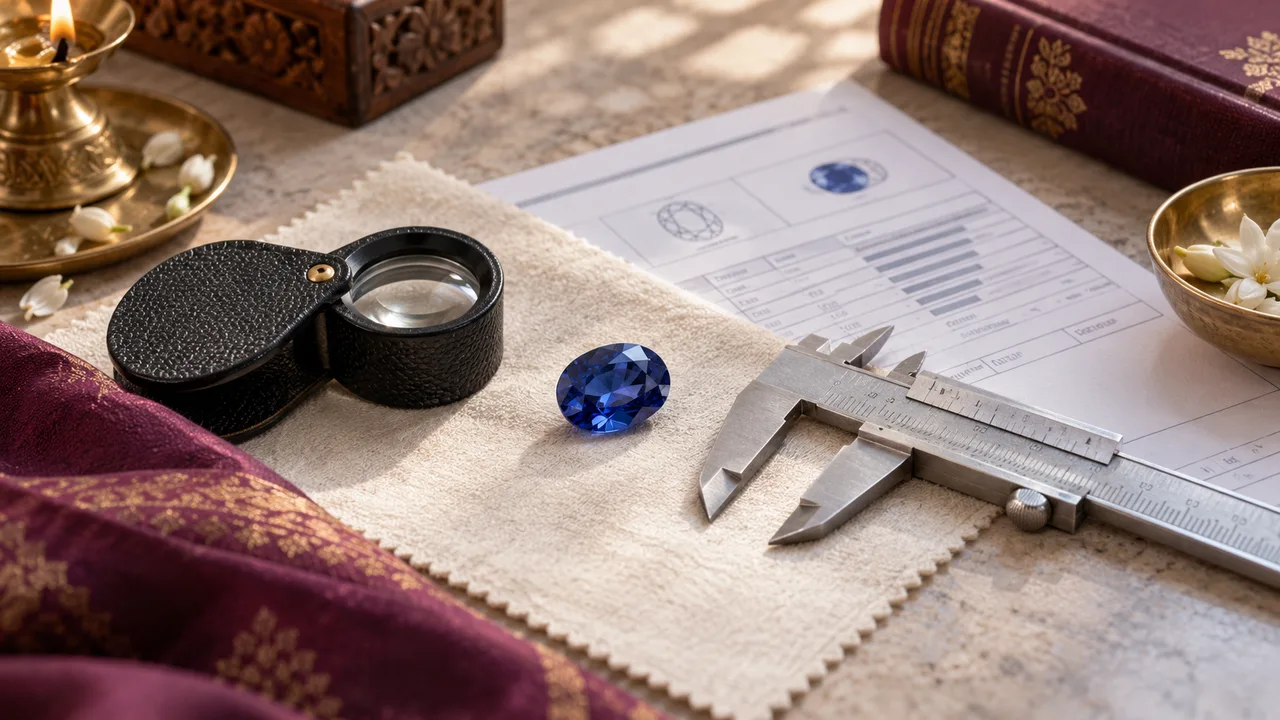
Learn what the label means, ask how the bead is identified, and keep spiritual meaning separate from a promised result.
Begin with three words
Rudraksha names the seed bead used in spiritual traditions. Mukhi refers to its faces or natural lines. A mala is a string of beads. Knowing these terms makes it easier to understand a listing without treating every description as a recommendation.
A number is not a complete description
A mukhi label tells you one part of what a seller claims to offer. Ask about the bead's size, condition, source and any work done to it. A photograph helps you see the surface; it does not settle every authenticity question.
Ask about the piece you will receive
Keep the conversation practical, especially when a bead is expensive or described as rare.
- Is the photo of the exact bead or an example?
- How is the mukhi description supported?
- What identification documents, if any, are supplied?
- What are the stringing, care and return terms?
Leave room for personal belief
Different traditions attach different meanings and customs to beads. Those meanings are not a medical prescription or a guarantee of prosperity. This article introduces vocabulary; it does not select a mukhi for you or replace a conversation about your question.
Sources & scope
- Isha: an introduction to Rudraksha Referenced for bead terminology only. Its benefit claims are not adopted here.
Educational demo for review, not Narayani’s approved advice, a product recommendation or a promise of health or financial outcomes.